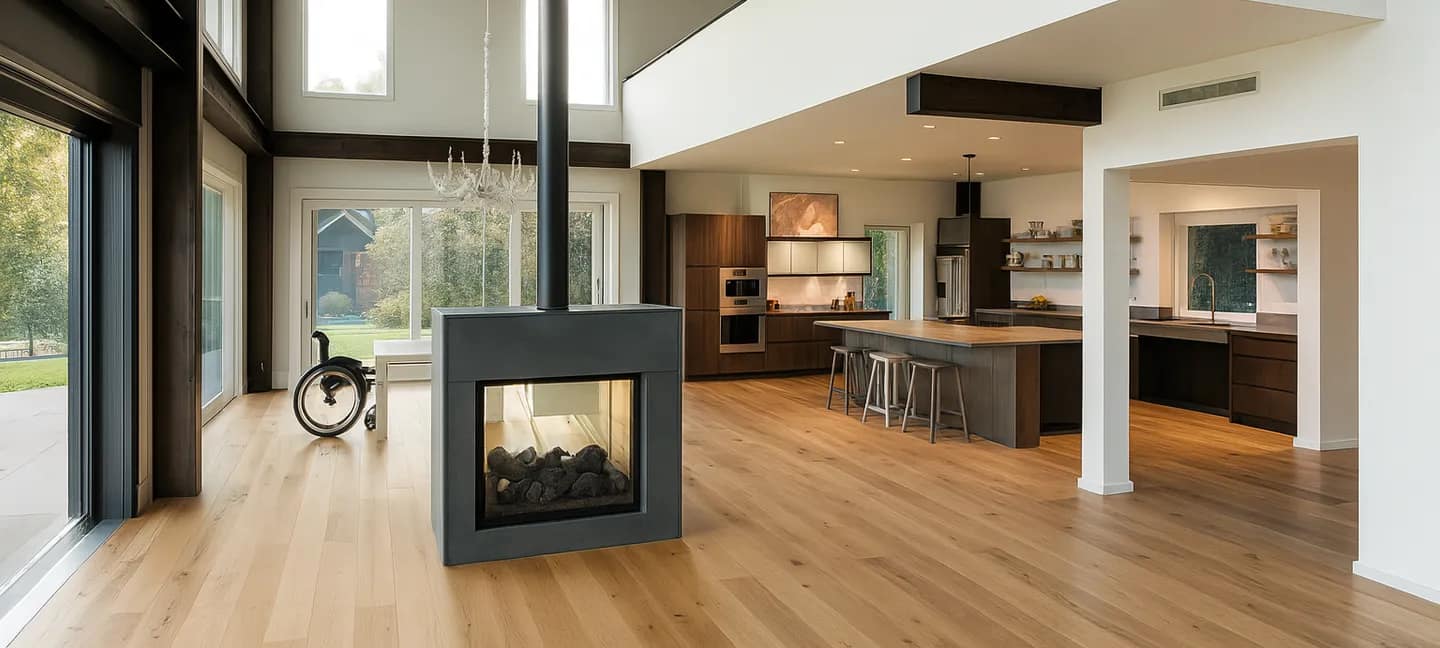

Today, I want to share with you a deeply personal perspective on the need for inclusive architecture, based not only on numbers and regulations, but on our stories, our lives.
The Reality of Living with a Disability
Being a wheelchair user can be a permanent, temporary, or a situation that anyone of us might face one day. I live this reality every day. But limitations are not restricted to mobility alone. Visual impairments, degenerative diseases, and other conditions can drastically change the way we interact with the world around us.
As a wheelchair user and activist, communicator, I receive many accounts from people facing challenges that, to many, may seem unimaginable. Stairs without ramps, doors too narrow to pass with our wheelchairs, inaccessible bathrooms… each small obstacle becomes a daily battle. That is why accessibility must be a priority, not an option.
The Power of Inclusive Landscaping
Something that touches me deeply is how a landscaping project can transform our relationship with space. Landscaping is not just about making spaces beautiful, but about making them alive and accessible. Accessible paths for wheelchair users, tactile trails for people with visual impairments, and adapted recreational areas are just some of the solutions we can and should implement.
I often ask myself: how can we ensure that all people, regardless of their limitations, feel welcome and included in every space we design? The answer always comes back to the need for deep empathy and a genuine commitment to inclusion.
Inclusion in High-End and Luxury Developments
There is a common misconception that accessibility is a topic only for low-cost solutions. However, I believe that high-end and luxury developments hold a great opportunity to make a difference. When luxurious spaces are also inclusive, we send a powerful message: inclusion is a luxury everyone deserves.
Technological innovations, such as automation systems that cater to the needs of people with visual impairments, barrier-free elevators, and adapted interior designs, can be incorporated without sacrificing aesthetics or comfort. More than a responsibility, it is a way to redefine what it means to live well.
A Call to Action
I would like to invite each of you to reflect on accessibility and well-being in our cities and spaces. Think about the barriers that exist and how transformative it would be to remove them. For those living with a disability, every adjustment, every ramp, every wider door makes an immeasurable difference.
As an ambassador and wheelchair user, my mission is to open everyone’s eyes to these needs and to inspire real change. I believe that, together, we can build a fairer and more accessible world for all. A world where each person, regardless of their limitations, feels valued and included.
Conclusion
My personal journey as a wheelchair user and my role as an ambassador have given me a clear purpose: to fight for a more inclusive and humane architecture. Accessibility is not just a technical issue, but a matter of human rights and dignity.
I hope that by sharing my vision and my experience, I can inspire others to join this vital cause. Believe me, change is possible and starts with each one of us.
With affection and hope,
Caroline