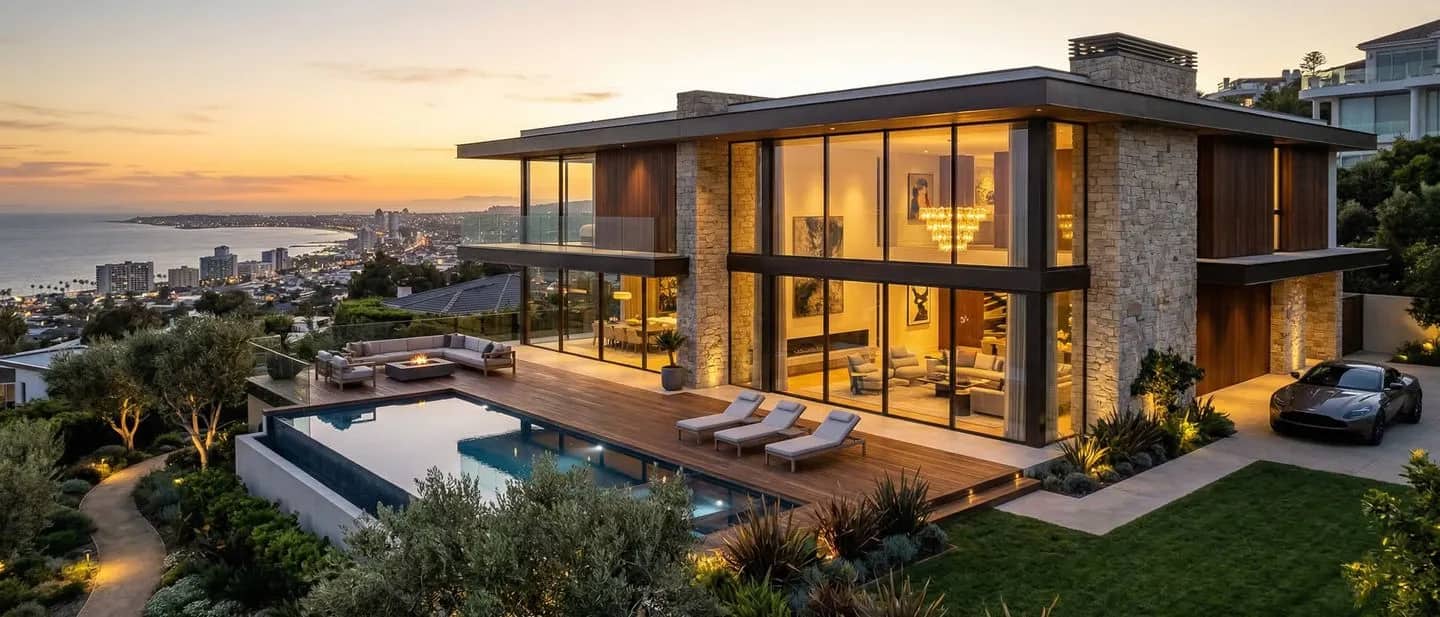
In the real estate market, the term high-end is frequently used to describe properties that stand out due to superior quality compared to the market average. However, identifying a high-end property involves more than just looking at the property’s value or size. This classification usually results from a combination of several factors, including location, architecture, construction quality, and living experience. For buyers and investors, understanding these elements is essential to properly assess a property’s position in the premium segment.
Location and Urban Context
One of the first aspects that help identify a high-end property is location. Properties in this segment are typically situated in areas with strong urban appreciation or privileged geographic features.
Common examples include:
- traditional and well-established neighborhoods;
- regions near the sea or green areas;
- zones with panoramic views;
- areas with strong cultural and gastronomic offerings.
Location influences not only the property’s value but also the living experience associated with it.
Architecture and Project Quality
Another important element is the quality of the architectural design. High-end properties often feature:
- well-resolved and functional designs;
- integration between indoor and outdoor spaces;
- balanced proportions;
- efficient use of natural lighting.
In some cases, the design may be signed by renowned architects or include distinctive architectural solutions that reinforce the property’s identity.
Materials and Finishes
The quality of materials used in construction also helps identify premium properties. Among the elements frequently present in this segment are:
- natural stones;
- premium wood;
- sophisticated finishes;
- home automation technology.
Besides the aesthetic aspect, these materials contribute to greater durability and comfort.
Infrastructure and Leisure Areas
High-end developments usually offer more complete infrastructure compared to traditional market offerings. Common features include:
- fully equipped gyms;
- architecturally designed swimming pools;
- social spaces and gourmet areas;
- advanced security;
- concierge services, in some cases.
These elements enhance the living experience and contribute to the property’s premium positioning.
Privacy and Exclusivity
Another important factor is the level of privacy offered by the property. High-end residences and developments tend to prioritize:
- lower unit density;
- greater distance between buildings;
- strict access control.
These characteristics are particularly valued by buyers seeking tranquility and security.
Living Experience
In recent years, the concept of high-end has also come to include the living experience.
Beyond the physical characteristics of the property, factors such as environmental comfort, integration with nature, and quality of social spaces have become relevant.
This trend reflects changes in buyer behavior, who value not only the property itself but also the lifestyle it provides.
High-End and Luxury
Although related, the concepts of high-end and luxury are not necessarily equivalent.
High-end refers to properties with superior quality within a given market, while luxury involves an additional level of exclusivity and rarity.
To better understand this distinction, you may also consult the article “Difference Between High-End and Luxury in the Real Estate Market”, which explores this comparison in depth.
Conclusion
Identifying a high-end property involves analyzing a set of factors beyond the property’s value.
Location, architecture, construction quality, infrastructure, and living experience are elements that help position a property in the premium real estate segment.
With the sector’s evolution, the concept of high-end continues to transform, reflecting new buyer expectations focused on quality of life, design, and exclusivity.