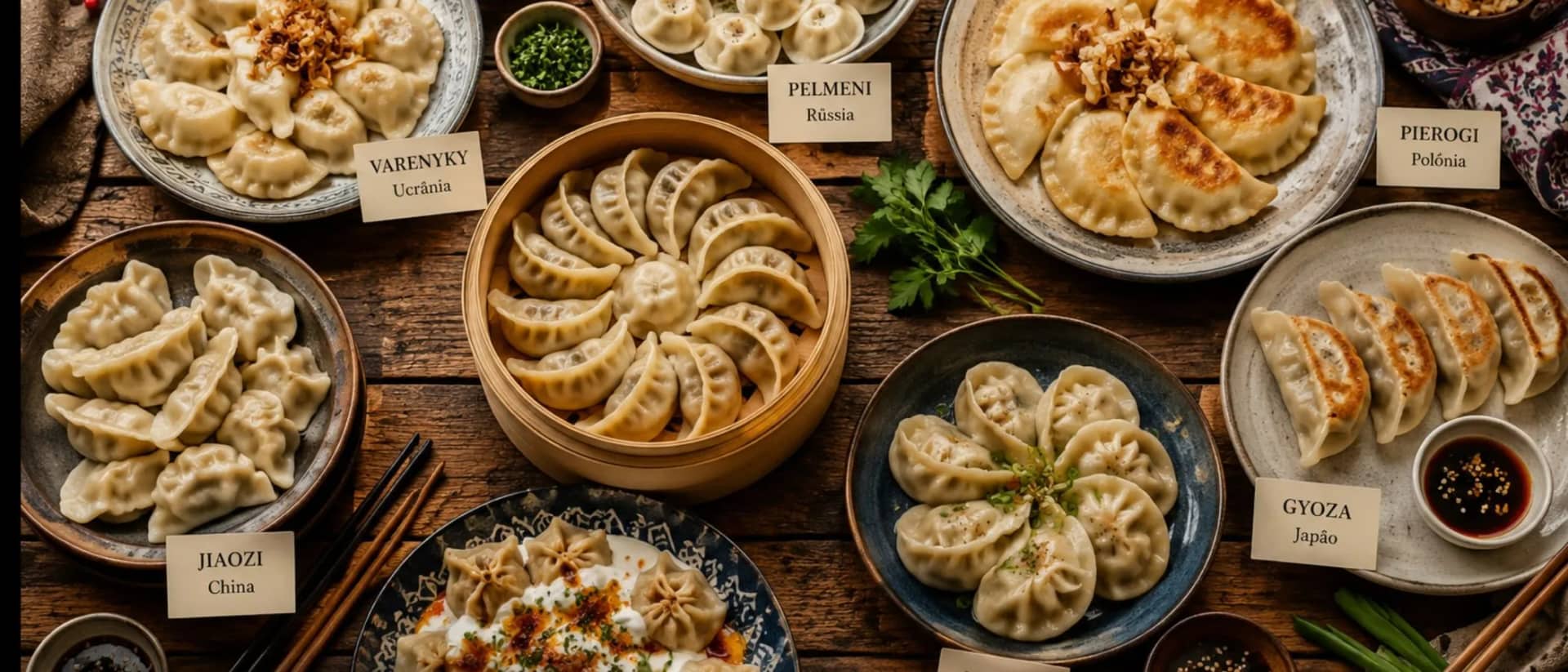

Few foods manage to cross borders, centuries, and cultures as naturally as stuffed pastas. Known internationally by the English term dumplings, they are present on virtually every continent, taking on different shapes, fillings, and cooking methods while preserving a common essence: turning simple ingredients into a meal capable of bringing families together and carrying traditions forward.
Long before globalization brought peoples and customs closer together, different civilizations were already preparing similar recipes. The combination of a thin layer of dough wrapped around meats, vegetables, cheeses, or fruit emerged as a smart solution to preserve food, make use of ingredients available in each season, and create nourishing meals. Over the centuries, these recipes evolved from a necessity into part of each region’s cultural identity.
In Eastern Europe, dumplings hold a prominent place in everyday life as well as family celebrations. In Ukraine, traditional varenyky are considered a national gastronomic heritage. Their fillings range from potato, fresh cheese, mushrooms, cabbage, meat, and fruit, especially cherries, and each family often preserves recipes passed down from generation to generation. More than food, varenyky represent warmth, memory, and togetherness.
In Russia, the famous pelmeni emerged as a practical alternative for facing harsh winters. Small and filled, they were prepared in large quantities during the deep cold and naturally stored frozen by the low temperature. All that was needed was to cook them when required, making them an efficient solution for long winter periods. Even today, they remain one of the most traditional dishes in Russian cuisine.
Poland is recognized worldwide for its pierogi, perhaps one of the best-known versions of European stuffed dough. There are savory recipes made with potato, cheese, mushrooms, sauerkraut, or meat, as well as sweet versions filled with seasonal fruit. In many Polish families, especially during Christmas, making pierogi is a true ritual, bringing different generations together around the same table.
The tradition of stuffed dough also spans all of Asia. In China, jiaozi have a centuries-old history and symbolize prosperity and good fortune, making them essential at Lunar New Year celebrations. Their shape resembles ancient gold ingots once used as currency, which is why eating them is associated with the wish for abundance in the year ahead.
In Japan, delicate gyoza have gained worldwide fame for their thin dough and the balance between crispiness and tenderness, while in Korea, mandu appear in soups, steamed, or lightly pan-fried. In Central Asia and Turkey, manti stand out, usually larger and steamed, served with yogurt, seasoned butter, and spices.
Italy also preserves a centuries-old tradition with ravioli, tortellini, and agnolotti. Although they are not usually classified as dumplings in Italian cuisine, they follow exactly the same principle: dough surrounding a carefully prepared filling, showing that peoples separated by thousands of miles developed very similar culinary solutions.
Historians and food scholars still debate how these recipes spread around the world. One of the most widely accepted theories links their expansion to ancient trade routes, especially the Silk Road, which connected East and West for centuries. Merchants transported not only fabrics, spices, and precious metals; they also carried culinary techniques, ingredients, and customs that were eventually adopted by different peoples.
Another hypothesis suggests that these recipes arose independently in various regions. After all, wrapping a filling in dough was a practical, economical, and efficient way to preserve food, make transport easier, and fully use available ingredients. As a result, distinct cultures arrived at surprisingly similar outcomes, even without direct contact.
It is precisely this convergence that makes dumplings one of the most fascinating topics in world gastronomy. Every fold of the dough, every shape, and every filling carries centuries of history, family traditions, and cultural influences. Despite differences in language, religion, and customs, there is an invisible bond connecting all these recipes: the value of food prepared with care and shared around the table.
In an increasingly globalized world, learning the origins of these dishes also means understanding how cuisine works as a living cultural heritage. Dumplings show that gastronomy goes far beyond flavor. It preserves memories, strengthens identities, and brings together peoples who, even when separated by continents, share the same creativity in turning simple ingredients into recipes that span generations.
Perhaps that is the greatest charm of stuffed pastas. They show that, regardless of origin or culture, there is a universal language capable of bringing people together: good food, prepared with tradition, respect for roots, and the desire to share stories around the table.