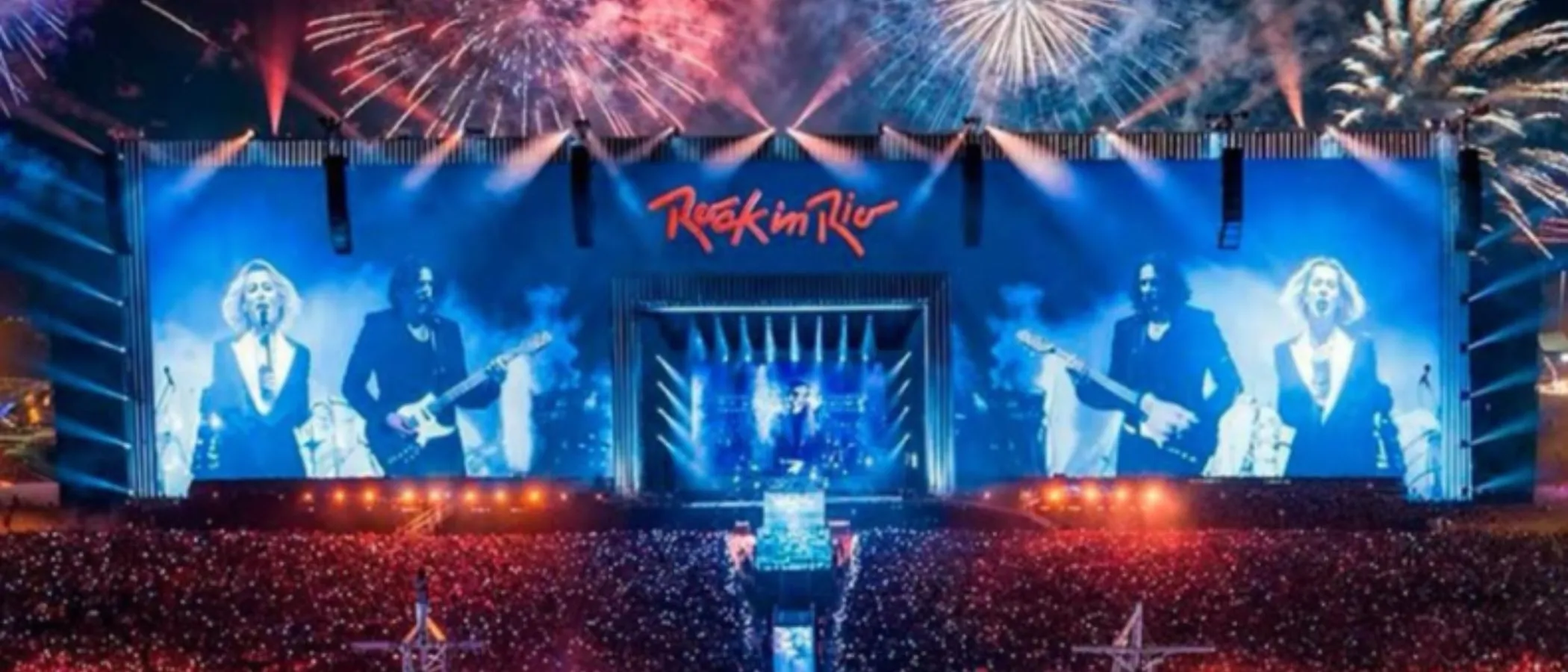

Rio de Janeiro’s role as the main gateway for foreign capital in Brazil is not a recent phenomenon; historically, the Marvelous City has served as a magnetic showcase, attracting international investors who see its unique geography as a safe haven for wealth allocation. This long-standing interest, once driven by the timeless charm of Copacabana and Ipanema, has taken on a new and more robust dimension in recent years. The consolidation of an uninterrupted agenda of global-scale events — encompassing everything from presidential summits and economic conferences to the world’s biggest entertainment festivals — has repositioned Rio’s ultra-luxury real estate market at an unprecedented level.
This continuous international exposure has not only renewed global desire for the city, but has directly transformed real estate dynamics, turning the visibility generated by major events into solid, liquid, and highly sophisticated asset appreciation.
The value appreciation driven by the global agenda is strategically distributed across the city, creating a very clear map of opportunities for investors. Leblon and Ipanema remain at the top of the pyramid, where the absolute scarcity of new land turns any residential launch into a fierce competition, pushing square-meter prices to levels comparable to those of major European capitals. At the same time, Barra da Tijuca reinforces its role as the epicenter of gated communities at the very highest standard, attracting those seeking generous floor plans, total privacy, and modern leisure infrastructure.
International buyer behavior has changed dramatically. The investor who once focused exclusively on Rio de Janeiro as a vacation destination has given way to a highly analytical and corporate profile. These are multinational executives, senior digital nomads, and high-net-worth families who see the city as a strategic hub in Latin America. This audience takes advantage of favorable exchange-rate fluctuations to acquire real assets resilient to inflation. They are drawn not only by the natural beauty, but by the liquidity the city offers: the certainty that demand for ultra-luxury rentals — whether corporate or during peak event seasons — ensures occupancy rates and returns (yield) above the global average.
In a scenario where Rio de Janeiro’s global visibility grows with each new event and foreign currency maintains strong purchasing power, the city’s luxury real estate market is experiencing a singular moment. This is not merely about acquiring a property on the world’s most famous beach, but about consolidating a strategic financial asset, protected and with strong real appreciation potential.
However, in the ultra-luxury market, time is the scarcest resource. The limited geography of the South Zone and the exclusive land plots in Barra da Tijuca impose a physical cap on the supply of new developments. For foreign or domestic investors seeking net returns and asset security, the ideal window of opportunity is now. Delaying entry into this market means competing for an even smaller inventory at inevitably higher prices in the next major event cycle.
Sheyla Carvajal