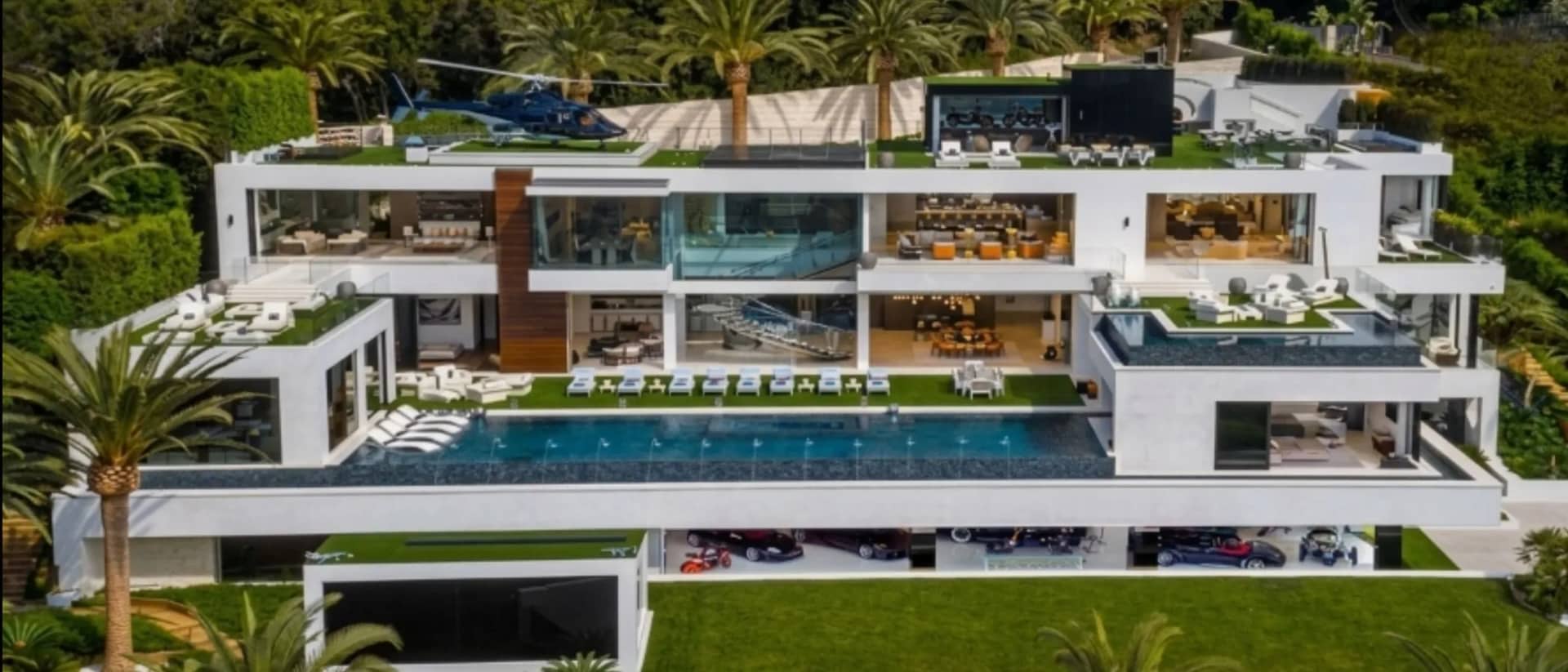

Analyzing Brazil’s high-end real estate market over the last 40 years means observing the transition of a sector that operated under the logic of hyperinflation and pure physical ostentation into a globalized ecosystem of financial assets, technology, and hyper-exclusivity.
Unlike the conventional market, ultra-luxury has always floated in its own orbit. It weathered failed economic plans, impeachments, and pandemics unscathed, establishing itself as one of the most resilient safe havens for wealth preservation in the country.
The evolution of the concept of “living well” at the top of Brazil’s socioeconomic pyramid can be traced through five major eras:
Four Decades of Transformation
The 1980s and Early 1990s: Wealth Protection and Gigantism
1986 - 1994
In the shadow of hyperinflation and with the end of the National Housing Bank (BNH) in 1986, luxury real estate was used as a store of value. The standard of the time called for gigantic apartments (many above 500 m²), with rigid layouts: enormous living rooms, oversized service areas with multiple staff quarters, and heavy marble and jacaranda finishes. Luxury was measured strictly by size and restraint.
The 1990s and 2000s: Stabilization and the Armored Era
1995 - 2005
With the arrival of the Real Plan and the subsequent creation of the Real Estate Financial System (SFI) in 1997, the market gained legal certainty. Rising urban violence shifted the focus of luxury to extreme security and isolation. Fortified buildings, armored guardhouses, and biometric-access elevators became standard. The first major gated horizontal communities integrated with golf courses outside major capitals also emerged.
The 2010s: Club Condominiums and Financialization
2006 - 2019
With major developers going public on the stock exchange, the sector injected billions into new projects. Luxury began to embrace the concept of a “private resort.” Common areas in buildings gained five-star club status, including spas, shared wine cellars, and finished American-style garages. Ostentation moved from the entrance to the apartment interior and into the condominium infrastructure.
Early 2020s: Pandemic and Quiet Luxury
2020 - 2024
The global health crisis reshaped priorities. Raw size gave way to wellness and flexibility. “Quiet luxury” (quiet luxury) and biophilia (architecture integrated with nature) began to set the rules. Apartments gained full home automation, terraces with fruit trees, and sophisticated home offices. The ultra-high-end inland and coastal markets exploded.
The Current Landscape: Global Brands and Billion-Real Records
2025 - 2026
Today, the ultra-luxury real estate market is at its historic peak, moving tens of billions of reais per year. The current standard demands absolute exclusivity: buildings with very few units (one per floor or boutique developments), signatures from international design studios (such as Pininfarina or Tonino Lamborghini), and a total focus on sustainability with strict environmental certifications.
The New Map of Ultra-Luxury
Forty years ago, talking about ultra-high-end real estate almost necessarily meant Jardins and Higienópolis in São Paulo, or Copacabana and Flamengo Beach in Rio de Janeiro. Today, the decentralization of wealth has redrawn the national landscape:
Balneário Camboriú (SC) Super-tall skyscrapers, such as the future Senna Tower, and penthouses contested by major fortunes. R$ 45,000 to over R$ 100,000/m²
São Paulo (SP) Established neighborhoods such as Vila Nova Conceição and Jardins; high liquidity and globally recognized architectural brands. R$ 40,000 to R$ 60,000/m²
Goiânia (GO) & Cuiabá (MT) Driven by record-breaking agribusiness growth. Ultra-high-end buildings with innovative integrated floor plans. R$ 15,000 to R$ 25,000/m²
Northeast Coast (BA, AL, CE) Horizontal beachfront communities focused on exclusive second homes and total privacy. Variable by project
The Shift in Buyer Profile: If in the 1980s the buyer was the patriarch of traditional industrial or banking families, today the target audience includes young tech entrepreneurs, major agribusiness figures, global athletes, and international investors, who see Brazilian properties as excellent dollar-denominated assets for portfolio diversification.