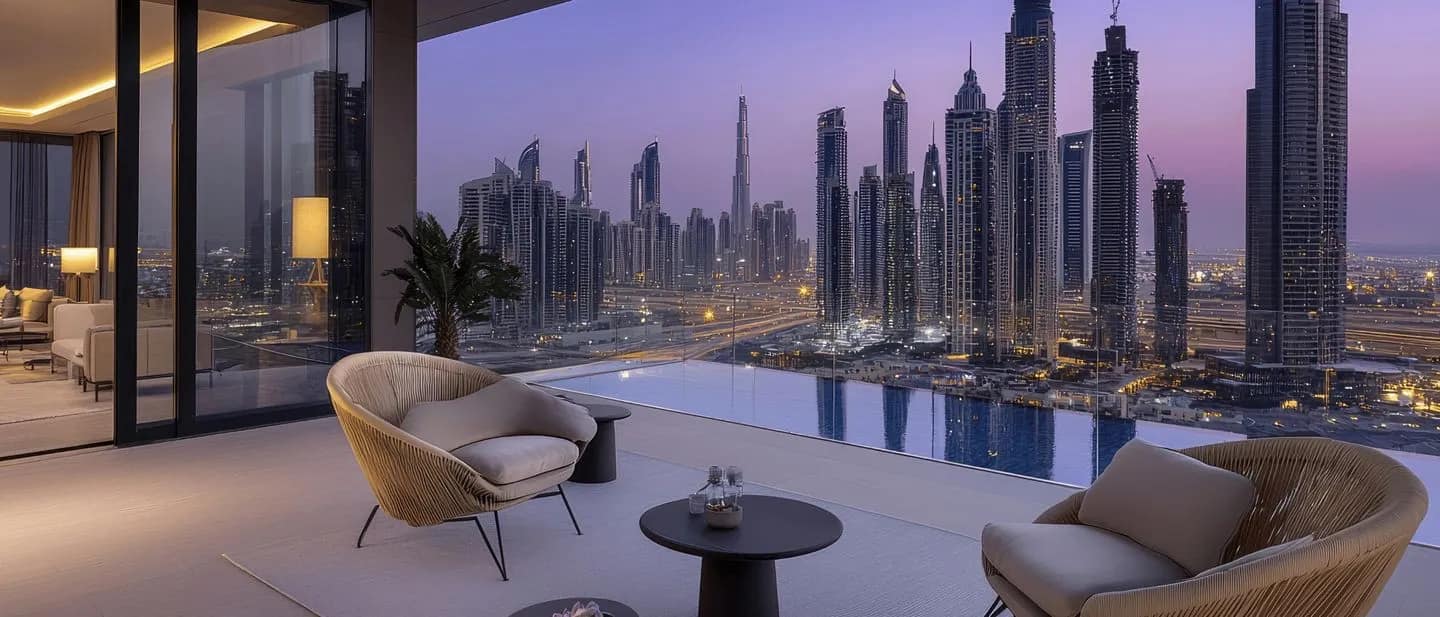
Dubai has established itself as one of the most desired destinations in the world for professionals, entrepreneurs, investors, and families seeking security, stability, an international environment, and economic efficiency. More than just a tourist spot, the emirate has become a true global hub for business, innovation, and quality of life.
This guide presents, in a practical and objective manner, the main paths for those considering moving to Dubai, covering visas, requirements, costs, bureaucracy, and daily life aspects.
Why are so many people choosing Dubai?
Several factors explain the continuous growth of the expatriate population:
- Stable political and economic environment
- Top-tier urban infrastructure
- High public safety
- Strong presence of multinational companies
- Highly competitive tax regime
- Dynamic and liquid real estate market
Dubai positions itself as a global city where talent, capital, and innovation find fertile ground to grow.
Types of visas to live in Dubai
1. Work Visa
For those who receive a local job offer.
The sponsoring company usually manages the process.
General requirements
- Valid passport
- Employment contract
- Medical tests
- Biometric registration
2. Real Estate Investor Visa
Available to those who buy property above minimum amounts set by the government.
Advantages
- Renewable residence permit
- Possibility to sponsor family members
3. Entrepreneur or Business Owner Visa
For those who start a company in Dubai or free zones.
Includes
- Business license
- Virtual or physical office
- Corporate bank account
4. Golden Visa (long-term)
Granted to investors, entrepreneurs, scientists, highly skilled professionals, and individuals with significant assets.
Typically required documents
- Valid passport (minimum 6 months)
- Standard photos
- Criminal record certificate
- Medical exams conducted in the Emirates
- Employment contract or proof of investment
- Certified translations when applicable
Each visa category has slight variations, but these documents form the basis for most applications.
How much does it cost to live in Dubai?
Costs vary depending on lifestyle and location.
Housing
- Studios: starting at competitive average annual prices in emerging areas
- Apartments and villas: wide range depending on neighborhood and standard
Other average costs
- Food: comparable to major international capitals
- Transportation: relatively affordable
- Healthcare: mandatory insurance
Dubai offers options from more economical lifestyles to ultra-luxury, catering to different profiles.
Healthcare system
- Health insurance is mandatory
- Highly qualified private network
- Hospitals and clinics with international standards
Companies usually include insurance in the employment package.
Education and schools
- British, American, IB, French international schools, among others
- Predominantly private education
- Highly competitive admission in top reputation institutions
Advanced planning is essential for families with children.
Opening a bank account in Dubai
Usually requires:
- Residence visa
- Emirates ID
- Proof of address
- Letter from employer or company
The banking system is modern, stable, and digitalized.
Real estate market: living or investing
Dubai allows foreigners to purchase property in specific areas called freehold areas.
Advantages
- Full ownership
- Strong rental demand
- Potential for appreciation
- Relatively fast purchase process
The real estate market is one of the pillars of the local economy.
Culture and adaptation
Dubai is multicultural. Over 80% of the population is foreign.
Important points:
- Respect for local laws
- Balanced dress code in public spaces
- Highly international professional environment
Adaptation tends to be quick for those who arrive open-minded.
Main challenges
- Very hot climate in summer
- Initial bureaucracy for documentation
- Adjustment to cost of living in premium areas
Despite this, most expatriates consider that the benefits far outweigh the challenges.
Who does Dubai make the most sense for?
- Qualified professionals
- Digital entrepreneurs
- Real estate investors
- Families seeking security and international education
- Individuals seeking a global environment and growth opportunities
Conclusion
Living in Dubai in 2026 represents, for many, a life and wealth strategy, not just a geographic move. The combination of stability, economic opportunities, security, and quality of life explains why the emirate continues to attract talent and capital from all over the world.
Planning, accurate information, and expert support are key factors for a successful transition.