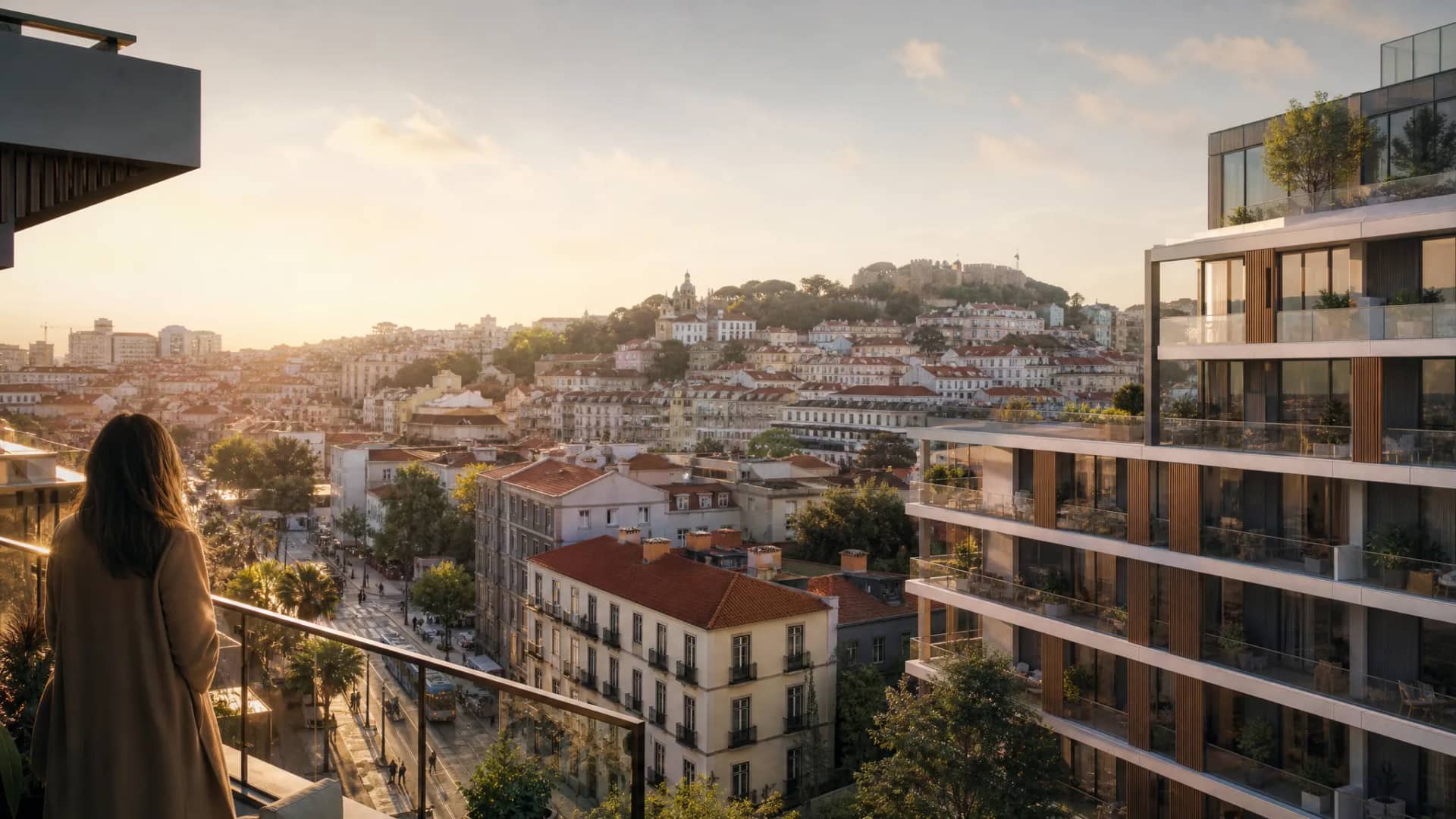

Housing in Portugal is at the center of a structural transformation. The housing crisis has become a broad concern in the country and across the rest of Europe: demand continues to far outpace supply, home prices and rents have risen well above incomes, and access to adequate housing is no longer just a social issue, but a matter of economic competitiveness, cohesion, and stability.
The European response points to more construction, less bureaucracy, greater industrialization, digitalization, and the mobilization of public and private capital. The diagnosis has been made. The real challenge now lies in implementation.
Housing crisis and housing supply in Portugal
Portugal is no exception. We continue to build too little, too slowly, and often in ways that do not match the population’s real needs. But increasing housing supply alone is not enough. We need to build more homes, but also different homes, adapted to the way we live, work, and form families today.
Housing in Portugal and demographic changes
The demographic dimension is central to this discussion. Portugal, like the rest of Europe, has changed profoundly over the past decades. We now have more families, but smaller families, greater diversity in family structures, more mobility, and new priorities.
Where large households once predominated, there are now more people living alone, couples without children, single-parent families, and blended households. Remote work and professional mobility have also changed the relationship with the home and with territory. However, much of our housing stock is still designed for a reality that no longer exists.
Housing typologies and homes adapted to new families
There is a shortage of homes in general, but there is also a shortage of well-suited housing typologies, locations compatible with everyday life, and solutions priced in line with average incomes. We need to offer options for both purchase and rental for increasingly diverse families at different stages of life.
Responding to this reality requires more than repeating traditional models. It means thinking about smaller homes, flexible spaces, controlled operating costs, and greater proximity to transportation, retail, education, healthcare, and other services. In practical terms, it is also a way to move forward on how to respond to the housing crisis with solutions that are better aligned with current lifestyle patterns.
New housing models in Portugal outside major urban centers
The creation of new residential hubs outside the main urban centers could help increase supply and make prices more affordable. But that growth must be accompanied by infrastructure and mobility. It is not enough to build far from the cities; it is necessary to ensure efficient connections, public transportation, and services that allow people to live well and maintain access to jobs and support networks.
Coliving and flex living in the real estate market
At the same time, the very concept of housing is becoming more diverse. Models such as coliving and flex living respond to a more mobile population that values flexibility, shared services, community, and contracts tailored to different lengths of stay.
They can be particularly relevant for young professionals, students, relocated workers, families in transition, or people arriving in a new city and looking for an immediate solution with greater stability and a stronger sense of belonging. These are solutions that do not replace traditional housing, but add responses to a more diverse real estate market, where the ways of living, working, and staying in a city are now much less linear.
That is precisely why the future of housing in Portugal requires a broader, more flexible offering that is more closely aligned with the diversity of families and life paths. In the face of the housing crisis, the answer is not just to build more, but to create homes adapted to new families and consolidate new housing models in Portugal capable of responding to a society in transition.