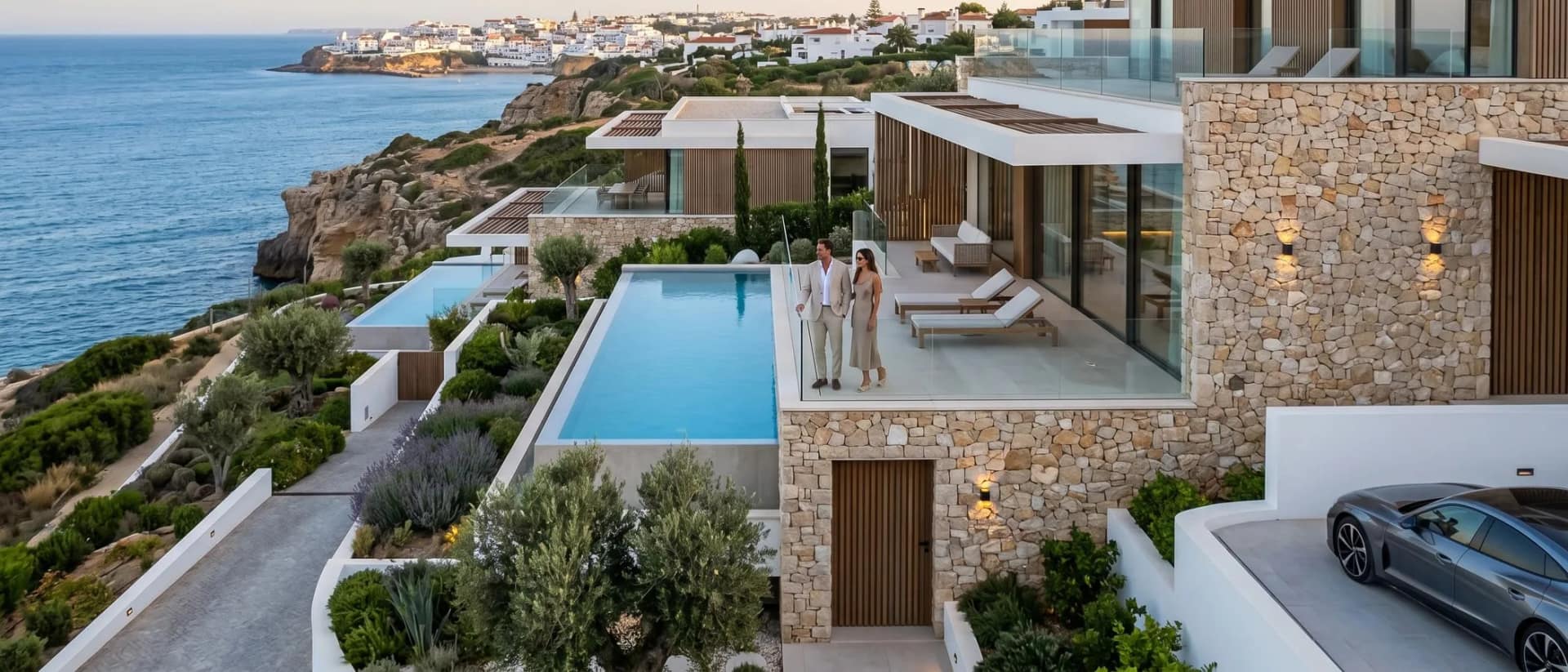
The Portuguese premium segment has matured. In 2026, the market no longer relies solely on speculative cycles, impulsive purchases, or decisions driven by momentary enthusiasm. The buyer has become more sophisticated, discerning, and international, while truly qualified offerings remain relatively scarce in key locations such as Lisbon and Cascais. This balance between high demand, global interest, and limited product helps explain why the Portuguese premium segment has entered a more mature and structural phase.
This is extremely healthy.
Mature real estate markets do not depend on permanent euphoria. They depend on consistent fundamentals: quality of location, depth of demand, legal security, international reputation, and the ability to preserve value over time. Portugal has been reinforcing precisely these attributes, adding quality of life, relative stability, international appeal, and an increasingly clear positioning on the radar of high-income buyers.
Who is buying today?
The market attracts profiles with high financial capacity, but the most relevant point is not just the origin of capital. It is the behavioral change of this buyer. Today, the Portuguese premium segment appeals to:
- global families
- Brazilian and European entrepreneurs
- heritage investors
- executives with international mobility
- buyers focused on lifestyle and quality of life
Lisbon, Cascais, Comporta, and other prime areas continue to benefit from international demand, while today’s buyer evaluates not only the property itself but also the living experience, transaction predictability, and the asset’s ability to maintain relevance in the future. External demand continues to play an important role, and international consultancies continue to highlight Portugal as one of the most appealing markets for buyers seeking lifestyle combined with wealth security.
What does this buyer demand?
Luxury no longer means only large size or high price.
Today, in the premium segment, luxury mainly means a rare combination of tangible and intangible attributes:
- unrepeatable location
- significant architecture
- privacy
- open views
- premium services
- coherent aesthetics
- operational security
The sophisticated buyer no longer seeks merely ostentation. They seek fluidity, discretion, authenticity, a consistent urban or natural context, and a property that resonates with their lifestyle. In other words, “luxury” has moved beyond scale and now means curation. This is particularly visible in the ultra-prime segment, where the scarcity of product with truly exceptional location, top finishes, and high privacy supports appreciation and differentiates the best assets from the rest of the market.
Where are the main hotspots?
Lisbon
Lisbon remains the natural reference for premium apartments and prestigious urban assets. The city combines international centrality, cultural life, infrastructure, services, and a limited stock of prime product in consolidated areas. According to Savills, luxury residential prices in Lisbon rose 4.4% in 2025, and the consultancy anticipates further appreciation between 4% and 5.9% in 2026, reinforcing the capital’s positioning among the most resilient prime markets.
Cascais
Cascais maintains strength among international families and buyers connected to the sea, with a rare balance between coastal lifestyle, proximity to Lisbon, and a consolidated prestige image. Savills highlights Cascais as one of Portugal’s strongest prime locations, supported by international demand, limited supply, and a solid reputation among buyers who value privacy, family environment, and ocean connection.
Comporta
Comporta has established itself as an expression of a rarer, more discreet, and emotional luxury. Its appeal lies not only in the property but in the context: nature, low density, stripped yet sophisticated aesthetics, and a sense of refuge. This has transformed the region into a symbol of less urban and more sensory exclusivity, very much aligned with the contemporary premium buyer’s behavior. Savills itself treats Comporta as a unique market within the Portuguese landscape, strongly associated with scarcity and the desire for authenticity.
The new luxury in 2026
The premium buyer increasingly seeks:
- time
- silence
- nature
- mobility
- authentic design
- discreet services
This shift is central. The new luxury is less performative and more experiential. It values well-being, privacy, operational ease, and a sense of place. Portugal is remarkably positioned against these criteria because it combines climate, coast, relative security, human scale, and international attractiveness in a single territory. It is not just about selling square meters but offering a way of living that remains desirable even in more rational and less speculative scenarios.
Conclusion
Mature markets do not depend on euphoria. They depend on sustainable desire.
Portugal has entered this category. The Portuguese premium segment today shows clearer signs of maturity: a more prepared buyer, increasingly selective quality product, appreciation supported by scarcity and persistent international demand, especially in markets like Lisbon, Cascais, and Comporta. More than a passing trend, the country consolidates itself as a geography of value for those seeking heritage, lifestyle, and permanence.