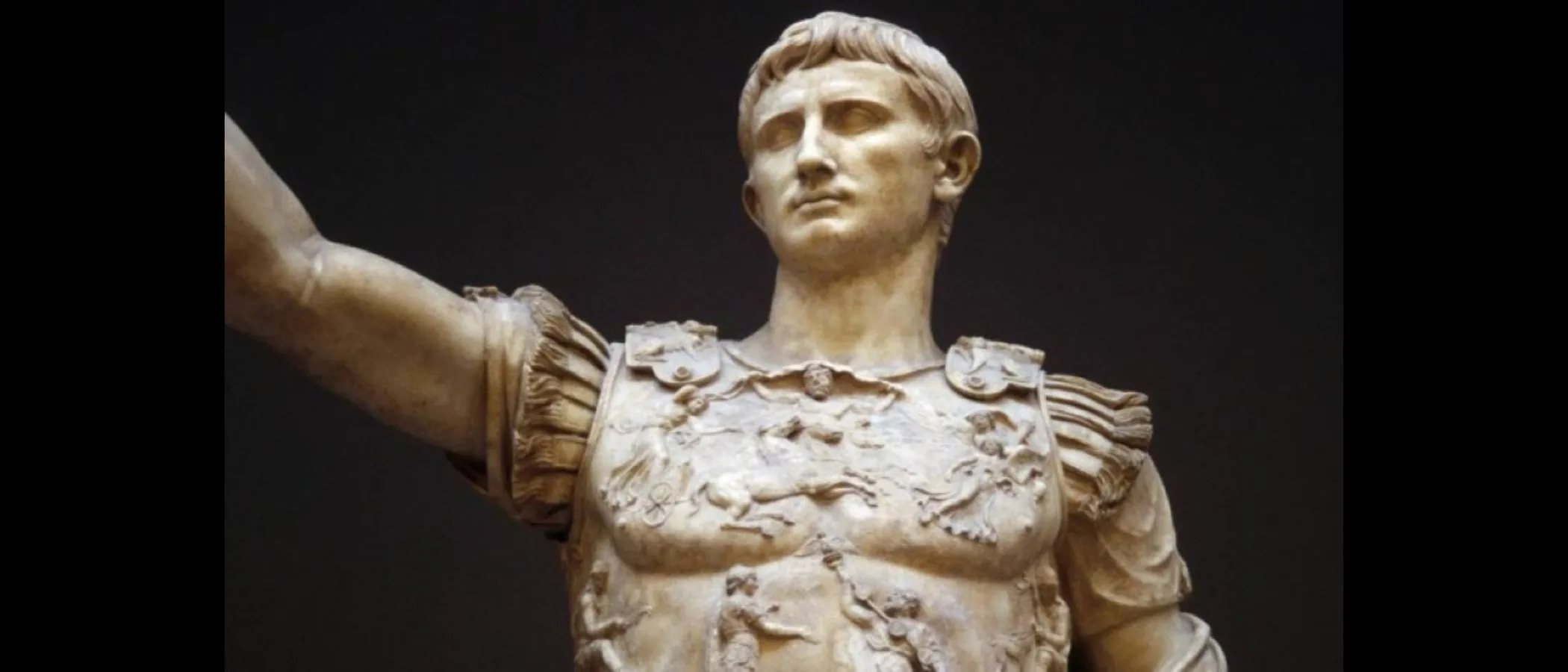
Augustus Caesar (Octavian) not only founded the Roman Empire, but also merged his personal wealth with the state’s finances. His “fortune” came from direct control over Egypt and strategic provinces. He centralized the economy, managing mines, taxes, and trade routes, and invested that capital in the infrastructure that consolidated the Empire.
Augustus’s “business” model and economic management were based on pillars that unified political power and territorial expansion:
Monopoly over Egypt: After defeating Cleopatra and Mark Antony in 31 BC, Augustus annexed Egypt as his personal property. This secured control of the grain supply and one of the richest economies of antiquity.
Provincial Administration: The empire was divided into senatorial and imperial provinces. The wealthy frontier regions and precious metal mines remained under Augustus’s direct control, and their profits funded the treasury and the payment of the military legions.
Acquisition and Inheritance: He inherited much of Julius Caesar’s colossal fortune, using those initial funds to recruit private armies and finance his political rise.
Infrastructure and Public Works: He reinvested his wealth and state surpluses in the construction of aqueducts, roads, and monuments, which created jobs, stimulated local trade, and increased popular support.
Augustus (also known as Octavian) was the first emperor of Ancient Rome . Augustus rose to power after the assassination of Julius Caesar in 44 BC. In 27 BC, Augustus “restored” the Roman Republic, although he himself retained all real power as Rome’s “first citizen.”
He was the first Roman emperor. He ruled from 27 BC to AD 14, ushering in an era of splendor and prosperity that marked Rome’s role in history. He was a descendant of the Julio-Claudian dynasty, since his mother was Julius Caesar’s niece.
Transformation of Rome: Known for his vast public works program, he proudly claimed to have “found a Rome of bricks and left one of marble”
Augustus Caesar’s personal fortune is estimated at around US$ 4.6 trillion (adjusted to current economic standards).
The first Roman emperor held wealth equivalent to one-fifth (20%) of the empire’s entire economy, which in turn represented 25% to 30% of global GDP at the time.
This scale of wealth is explained mainly by the fact that all of Egypt and its vast riches were Augustus’s personal property, in addition to his direct control over wealthy provinces and mines.
The financial success of his reign laid the foundations for the so-called Pax Romana — two centuries of stability that boosted trade across the Mediterranean world