
There are cities that impress with the grandeur of their architecture. Others, with the richness of their cuisine. Some, with dynamism and speed. Porto Alegre, however, achieved the feat of combining all these aspects without losing a millimeter of its strong identity.
Those arriving here for the first time usually keep in memory the spectacle of the sunset over the Guaíba. And with good reason; it is one of the most beautiful and iconic scenes in Brazil. But Porto Alegre goes far beyond enjoying its landscapes. There is a very distinctive rhythm flowing through the veins of this city. A lifestyle that mixes solid traditions, a discreet sophistication that doesn’t need to demand attention, and a deeply close connection to the street, parks, and urban movement.
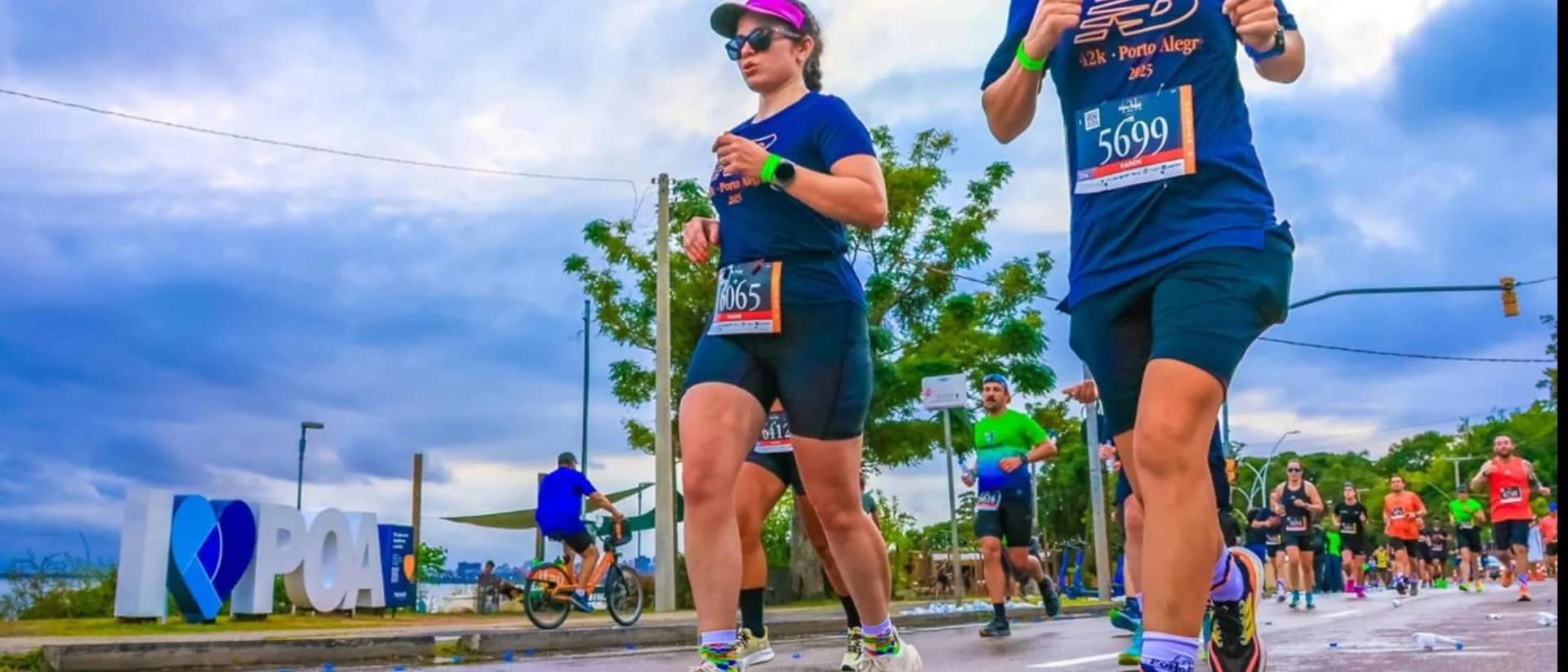
Perhaps it is exactly because of this vocation that Porto Alegre has become a major national reference in road running.
Here, running is not limited to physical exercise. It has been incorporated into the very lifestyle of the residents. Running has become a meeting point, a healthy routine, synonymous with quality of life, and a strong channel of social connection. The revitalized Guaíba waterfront has completely transformed the urban experience of the capital. Today, walking or running there late in the afternoon is an inseparable part of Porto Alegre’s culture. Parcão, located in the charming Moinhos de Vento neighborhood, remains one of the most desired places for those who value well-being and genuine contact with the city. Meanwhile, Parque da Redenção carries that rare mix of history, tradition, and constant movement which gives Porto Alegre its unique personality.
There is also a very relevant technical aspect: the city has one of the fastest marathon courses in Brazil. The Porto Alegre International Marathon, a long-standing event in the national sports calendar, attracts athletes from different parts of the world precisely because of the high quality of the flat route and the excellent urban infrastructure the capital offers.
But the most interesting point of this dynamic is not just the sport itself. It is what this behavior reveals about Porto Alegre.
The most desired and valued cities in the world today share a crucial trait: they offer more human urban experiences. They are places where it is still possible to walk without hurry, visit traditional cafés, enjoy extensive green areas, and live daily life in a genuine way.
Porto Alegre has managed to preserve this essence.
The cultural influence of Açorian, Italian, and German roots is still clearly evident in the architecture, cuisine, and behavior of Porto Alegre’s residents. The Public Market remains the great living symbol of this heritage. At the same time, historic mansions coexist harmoniously with contemporary high-end developments in upscale neighborhoods such as Moinhos de Vento, Petrópolis, and Bela Vista—areas that help shape and define the true meaning of upscale living in the state capital.
It is exactly at this intersection that Porto Alegre begins to attract the most attentive eyes of the luxury real estate market.
After all, the concept of new luxury has changed substantially. Today, sophistication is not linked to excess or visual ostentation; it is focused on experience, quality of daily life, mobility, and the real possibility of living well every day. Quality of life is no longer just a passing trend but has become a solid asset.
Few Brazilian capitals manage to combine nature, tradition, distinctive architecture, well-being, and active urban life with the same harmony that Porto Alegre delivers. In the end, this city’s greatest luxury is precisely this: the unique way it invites us to live.