Throughout history, certain residences have become symbols of the utmost sophistication in the world of architecture and the real estate market.
These properties stand out not only for their financial value but also for the combination of exclusive location, exceptional architecture, monumental scale, and history.
Although it is difficult to establish a definitive ranking, several homes are frequently mentioned in specialized publications as some of the most luxurious houses in the world.
Antilia – Mumbai, India
Among the most well-known private residences on the planet is Antilia, located in Mumbai.
The property belongs to Indian businessman Mukesh Ambani, chairman of Reliance Industries.
Commonly cited features of the residence include:
• approximately 27 floors
• about 37 thousand square meters
• multiple helipads
• private cinema
• several parking levels
• areas dedicated to leisure and wellness
Designed by the firm Perkins & Will and with interiors associated with Hirsch Bedner Associates, Antilia has become one of the most talked-about private homes worldwide since its completion.
Various specialized media estimates place its construction cost in the range of hundreds of millions or even billions of dollars, depending on the valuation methodology.
Villa Leopolda – Côte d’Azur, France
Located on the French Riviera, Villa Leopolda is often cited as one of the most valuable residential properties in Europe.
The property dates back to the early 20th century and was associated with King Leopold II of Belgium, from whom it inherited its name.
Property features include:
• vast landscaped gardens
• multiple auxiliary buildings
• panoramic views of the Mediterranean
The villa became internationally known after several high-value real estate transactions were reported over the decades.
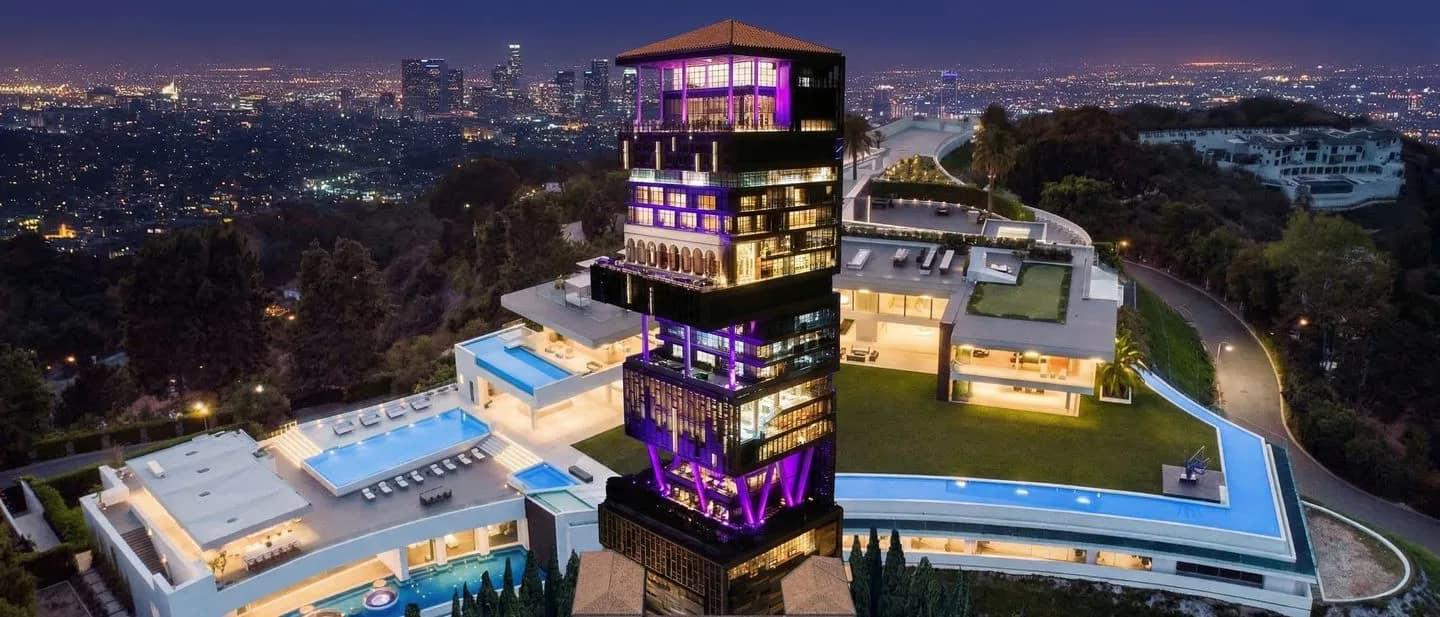
The One – Bel Air, Los Angeles
Among the most renowned contemporary mansions is The One, located in Bel Air, Los Angeles.
The property was developed by real estate producer Nile Niami and became widely known for its monumental scale.
Reported features include:
• more than 9 thousand square meters of built area
• dozens of bedrooms and suites
• private cinema
• bowling alley
• panoramic views of Los Angeles
The property gained global attention when it was auctioned in 2022, extensively covered by outlets such as Bloomberg and CNBC.
Fair Field – Hamptons, United States
In the Hamptons, a region known for high-end residences in the United States, stands Fair Field, a property associated with investor Ira Rennert.
The residence is often cited as one of the largest private homes in the United States.
Features frequently mentioned in reports include:
• dozens of rooms
• various sports facilities
• extensive gardens and grounds
• prime oceanfront location
The property became known for its size and architectural style inspired by European palaces.
Villa Les Cèdres – Saint-Jean-Cap-Ferrat, France
Another residence frequently cited among Europe’s most luxurious properties is Villa Les Cèdres, located in Saint-Jean-Cap-Ferrat.
Built in the 19th century, the property features:
• extensive botanical gardens
• classic Mediterranean architecture
• prime location on the French Riviera
Over time, the villa has been linked to various owners and has been subject to internationally publicized real estate negotiations.
What truly makes a house luxurious
More than financial value, real estate experts point out that certain features are common among residences considered luxurious.
Among the most relevant factors are:
exceptional location
Properties situated in rare areas, such as waterfronts or historically valued neighborhoods.
iconic architecture
Designs by renowned architects or featuring unique architectural traits.
privacy and security
Luxury homes are often designed to provide a high level of privacy.
living experience
Leisure spaces, wellness areas, integration with nature, and sophisticated design are common elements in this segment.
Luxury real estate and contemporary architecture
In recent years, the concept of luxury in the real estate market has undergone significant transformations.
Where luxury was once often associated with size or property value, today it involves a more complex combination of factors, including:
• contemporary design
• sustainability
• integrated technology
• wellness experiences
This evolution reflects changes in the behavior of high-net-worth buyers, who seek homes capable of offering quality of life and architectural identity.
The fascination with grand residences
Extraordinary residences have always sparked public curiosity.
Beyond representing economic power, these properties are also seen as architectural and cultural expressions, often designed to become landmarks of design and engineering.
For this reason, iconic mansions continue to attract interest not only from investors and buyers but also from architects, designers, and real estate enthusiasts.