
Praia do Forte in Cabo Frio: History, Culture, and the Legacy of São Mateus Fort
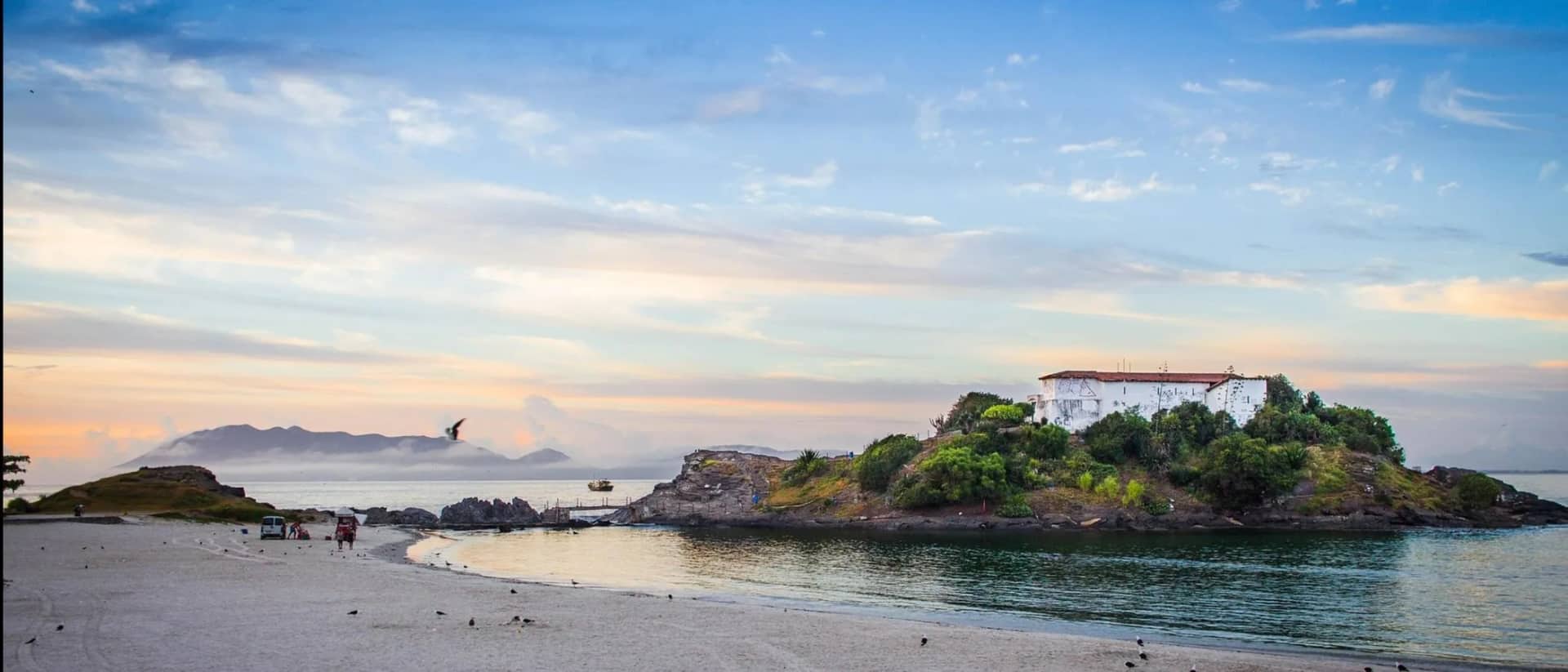
Praia do Forte in Cabo Frio is one of the most famous postcard views in the Lakes Region, in the state of Rio de Janeiro. With approximately 7.5 kilometers of fine white sand, crystal-clear waters, and a deep blue sea, it delights residents and visitors year-round. More than a paradise-like landscape, Praia do Forte brings together an important historical landmark: São Mateus Fort, one of the oldest monuments on the Brazilian coast.
The origins of São Mateus Fort
The history of Praia do Forte is directly linked to São Mateus Fort, built in the 17th century to protect the region against foreign invasions, especially from the French, English, and Dutch, who competed for control of the Brazilian coast because of the value of brazilwood and the strategic position of the shoreline.
The first fortification was erected around 1616, shortly after the founding of the city of Cabo Frio. Over the centuries, the fort underwent expansions and renovations until it acquired the stone structure that remains preserved to this day.
Positioned on a rocky promontory at the end of the beach, São Mateus Fort offered a wide view of the sea, making it possible to spot vessels approaching the coast. Its cannons protected the entrance to the bay and ensured the safety of the local population.
Today, the monument is listed by the National Institute of Historic and Artistic Heritage (IPHAN) and represents an important symbol of Brazil’s military and colonial history.
A historic landmark by the sea
Visiting São Mateus Fort is like taking a journey into the past. Its simple architecture, built in stone and lime, preserves characteristics of Portuguese military engineering from the colonial period.
From the top of the walls, visitors enjoy one of the most beautiful views in the city, taking in:
The entire stretch of Praia do Forte;
Itajuru Canal;
Japonês Island;
The crystal-clear waters of the Atlantic;
One of the most famous sunsets in the Lakes Region.
The site has become a must-see stop for tourists, photographers, and history lovers.
Tourism at Praia do Forte
In addition to its historical value, Praia do Forte is Cabo Frio’s main tourist destination. Its infrastructure caters to different types of visitors, offering:
Beachfront kiosks and restaurants;
A boardwalk for walking and biking;
Areas for beach sports;
Chair and umbrella rentals;
Boat tours around the region.
The cold waters, influenced by the upwelling phenomenon, are extremely clean and attract diving, stand-up paddleboarding, surfing, and sport-fishing enthusiasts.
During peak season, the beach welcomes thousands of tourists from all regions of Brazil and from abroad as well, establishing Cabo Frio as one of the most sought-after destinations on the coast of Rio de Janeiro.
Culture and Cabo Frio identity
Praia do Forte is also the setting for important cultural events, sporting activities, and festivals throughout the year. Its waterfront brings residents together for physical activities, family leisure, and landscape appreciation.
São Mateus Fort, in turn, represents a link between the city’s past and present. It recalls the period of colonial disputes and reinforces the importance of preserving historical memory as part of tourism development.
One of the greatest landmarks in the Lakes Region
The combination of lush nature, historical heritage, and excellent infrastructure makes Praia do Forte one of the most complete destinations in the state of Rio de Janeiro.
Those who visit Cabo Frio find much more than a beautiful beach: they discover a setting where history, culture, and tourism coexist in perfect harmony. São Mateus Fort remains the city’s guardian for more than four centuries, offering visitors a unique experience that combines historical knowledge with one of the most breathtaking landscapes on the Brazilian coast.
Getting to know Praia do Forte means discovering one of the most emblematic places in the Lakes Region, where the blue sea meets centuries of history and turns every visit into an unforgettable experience.