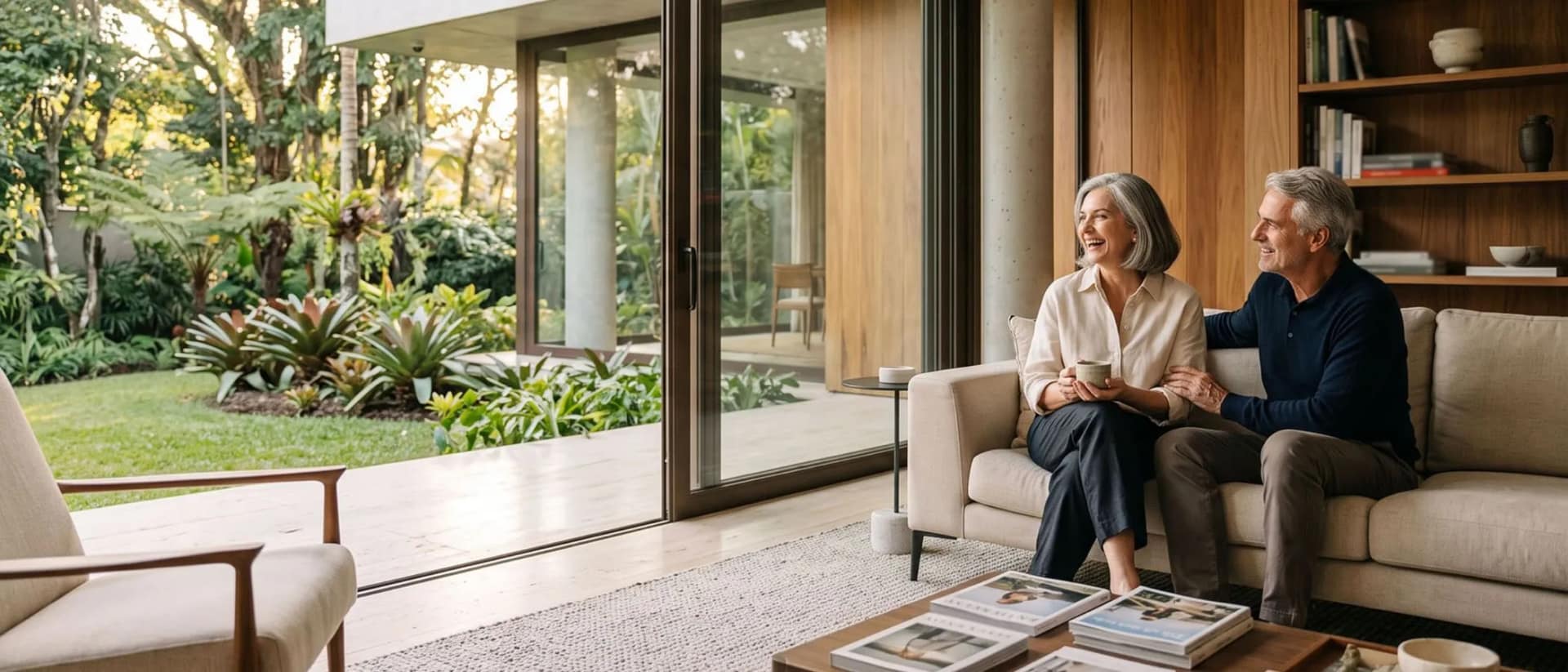

For a long time, talking about high-end real estate meant talking about location, square footage, architecture, finishes, and infrastructure. These attributes remain important, but a new dimension has been gaining ground: a home’s ability to keep up with the different stages of life.
This perspective connects to a discussion that is becoming increasingly present around longevity and how the spaces where we live can accompany different phases of life.
A 2026 report from Sotheby’s International Realty, based on information from real estate professionals working in the US$10 million-plus segment, identified longevity as a relevant trend in this market. According to the survey, nearly 38% of the professionals consulted said that the possibility of aging in one’s own home is becoming an increasingly important factor in buyers’ decisions.
The same research shows that 62% of the professionals consulted consider lifestyle an increasingly important factor for luxury property buyers.

A home that keeps pace with life
Thinking about longevity does not mean designing a house specifically for old age. It means considering whether that residence will continue to make sense as life changes.
Integrated spaces, abundant natural light, comfortable circulation, few level changes, and rooms that can serve different functions are features that can support this flexibility.
A primary suite on the ground floor, for example, may be a convenient architectural choice today and remain useful in the future. The difference lies in designing the home not only for the moment of purchase, but for the story that will be lived within it.

When wellness enters architecture
The concept of wellness is also gaining ground in discussions about the future of the spaces where we live.
The Global Wellness Institute (GWI) defines wellness real estate as built environments proactively designed, built, and operated to support the holistic health of their occupants, visitors, and the community. According to the organization’s latest data, this market reached US$876 billion in 2025, with projections to reach US$1.8 trillion by 2030.
According to the GWI, the concept can be applied to different types and scales of projects, from a single residence to entire communities, and is not limited to the luxury market or the presence of specific amenities. The proposal intentionally considers different dimensions of well-being in the planning and operation of spaces.
In practice, this can be reflected in choices related to the quality of the environments, integration with nature, opportunities for movement and physical activity, social connection, and the creation of spaces dedicated to rest and balance.
More than adding an amenity to a property, this perspective proposes thinking of the built environment as part of the living experience — an approach that gains relevance as health, well-being, and quality of life take up a larger place in discussions about architecture and housing.
The luxury of aging without having to move
There is also a practical dimension to this transformation. A residence designed to accompany different moments in life can allow residents to adapt spaces as their needs change.
It means being able to imagine children growing up in that environment, hosting friends, working from home, transforming a space over the years, or simply continuing to live there as new phases arrive.
More than buying a property that meets today’s needs, it is about considering an asset capable of accompanying a life story.
The future of luxury may lie in what does not seek attention
Perhaps the next great symbol of sophistication will not be what impresses immediately, but what remains relevant over time.
Architecture that ages well. A comfortable environment. A home that offers privacy. Spaces that can take on new functions. A pleasant relationship with nature and the surroundings.
These are features that do not always appear on a spec sheet, but they can be part of the experience of living. In the end, talking about longevity in real estate is talking about a shift in perspective.
We are no longer choosing only where we want to live. We are choosing how we want to live — today and in the next chapters of our story.
And perhaps that is one of the most contemporary definitions of luxury: having a home that not only keeps up with life, but makes sense for it.
Finding a property that matches your lifestyle
Choosing a residence is also choosing how we want to live. That is why, beyond viewing properties, having guidance that understands your moment, your priorities, and the way you want to live can make all the difference.
Regina Marchi Prestige supports this choice in a personalized way, connecting people to properties that make sense for their stories and life plans.
Sources and references:
Sotheby’s International Realty, 2026 Mid-Year Luxury Outlook.
Global Wellness Institute, Wellness Real Estate Market Reaches $876 Billion—Forecast to Hit $1.8 Trillion by 2030 (2026).