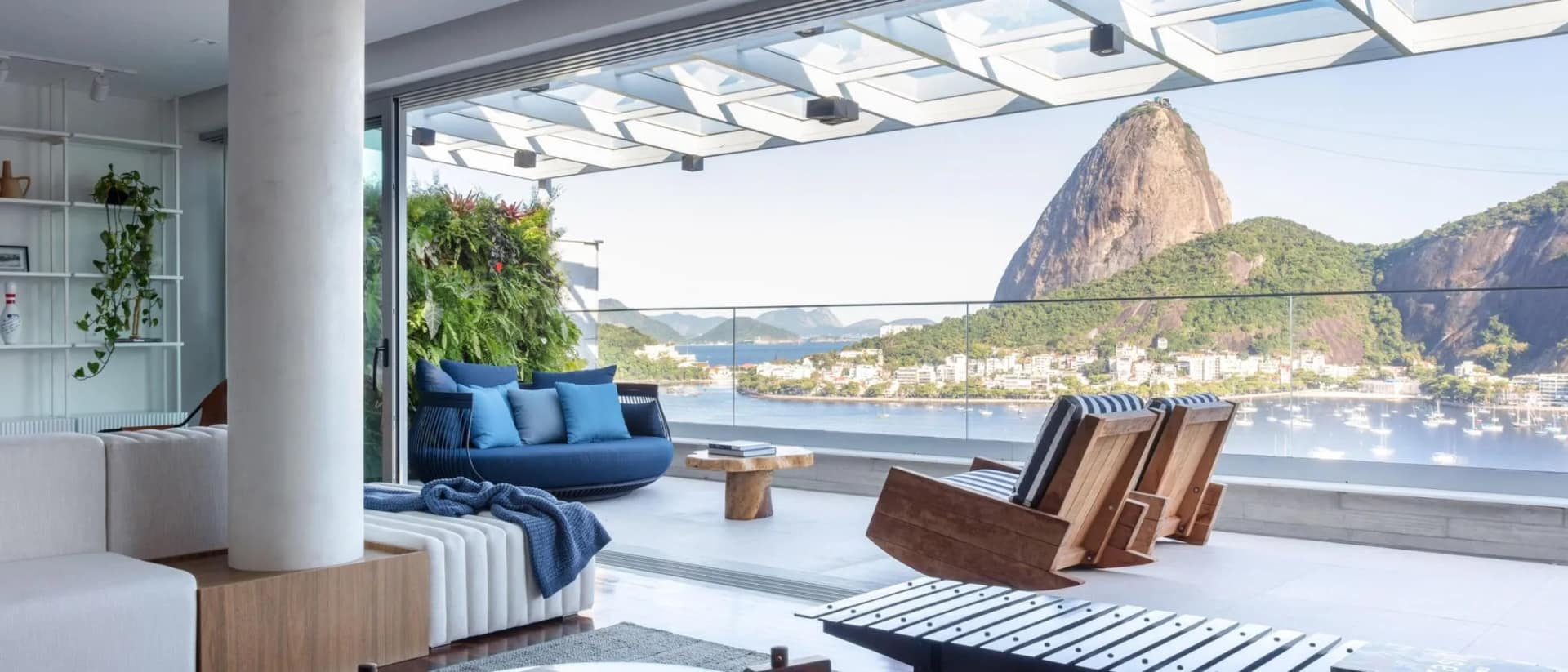

With rental prices rising faster than sale prices, Rio de Janeiro’s real estate market presents a scenario that deserves the attention of buyers, owners, and investors. But understanding this gap requires looking beyond percentages and considering the true value of each property.
Rio de Janeiro’s real estate market is at a moment that invites important reflection: given the evolution of sale and rental prices, what makes more sense for someone looking to buy a property, build wealth, or generate income?
According to the Residential Real Estate Market Overview report, prepared by Data Secovi, from Secovi Rio, advertised residential rental prices in the city of Rio de Janeiro rose by 24.78% in the 24 months ended in September 2026. Over the same period, advertised sale prices increased by 4.35%.
The difference stands out because it reveals two distinct movements within the same market. While rentals showed stronger growth, sale prices followed a more moderate upward path, opening space for new analyses of profitability, asset appreciation, and acquisition strategies.
However, these figures do not mean that buying to rent is necessarily more advantageous than purchasing a property to live in. The answer depends on factors that go far beyond price movements.
What do the numbers reveal about the Rio market?
In September 2026, the average advertised residential rental price in Rio de Janeiro reached R$ 59.36 per square meter, while the average advertised sale price reached R$ 10,264 per square meter.
Regional analysis reveals important differences:
RegionAdvertised rent per m²Advertised sale price per m²South ZoneR$ 96.77R$ 15,048Barra and surrounding areasR$ 59.06R$ 9,512Central ZoneR$ 54.29R$ 7,997North ZoneR$ 26.85R$ 5,027West ZoneR$ 20.35R$ 3,466
Source: Data Secovi / Secovi Rio, September 2026. Average advertised values, subject to differences between neighborhoods, properties, and negotiations.
The South Zone remains the region with the highest average advertised prices, both for sale and for rent. Barra da Tijuca and its surroundings show a distinct dynamic, with residential characteristics, condominium infrastructure, and highly diverse property profiles.
The Central Zone also deserves attention for its relationship between acquisition prices and rental values, especially in a context of urban transformation and building rehabilitation.
These differences show why choosing a property for investment requires considering the specific behavior of each location, not just the citywide average.
Buying to live: a decision that goes beyond the numbers
For those looking for a home, financial analysis is important, but it represents only one dimension of the decision.
Location, architecture, privacy, mobility, proximity to services, and quality of life directly influence the living experience. In the luxury market, attributes such as a unique view, integration with nature, the layout of the spaces, and the identity of a neighborhood also shape the perception of value.
An apartment in Lagoa, a penthouse in Ipanema, or a residence in Barra da Tijuca may meet completely different needs and lifestyles, even when they have similar purchase prices.
In addition, buying to live involves evaluating the intended length of stay, acquisition and maintenance costs, available resources, and alternative uses for the capital.
The most suitable decision is the one that combines financial soundness with compatibility with the life the buyer wants to build.
Investing to rent: when income meets equity
For those who want to buy a property as an investment, the growth in advertised rents is a relevant indicator.
When rental prices rise faster than sale prices, the relationship between potential rental income and acquisition cost may become more favorable.
That does not mean, however, that all properties offer the same opportunity.
A property’s profitability depends on factors such as rental demand, condition, condominium fees, taxes, maintenance, vacancy periods, and the actual terms of negotiation.
It is also necessary to distinguish gross profitability from net profitability.
The former relates annual rental income to the amount invested in the purchase. The latter considers the costs and expenses involved in the operation, providing a perspective that is closer to the investment’s economic result.
For example, a property purchased for R$ 1 million and rented for R$ 5,000 per month would have a nominal gross return of 6% per year, before expenses, taxes, vacancy, and acquisition costs. The net result may be significantly different.
For this reason, a property with a higher advertised rent is not always the most profitable investment.
South Zone or Barra da Tijuca: where are the opportunities?
Comparing these regions requires understanding what each market offers.
In the South Zone, neighborhoods such as Leblon, Ipanema, Lagoa, and Botafogo bring together different property profiles, services, and residential demand. Urban consolidation, proximity to the sea, and the limited availability of certain property types may contribute to the perception of exclusivity.
In Barra da Tijuca, the market offers a diversity of condominiums, contemporary developments, and properties with leisure and service amenities, as well as residential options with different sizes and layouts.
For investors, the choice between these regions should consider not only the purchase price and expected rental income, but also liquidity, the profile of the target audience, competing supply, and the property’s maintenance and appreciation prospects.
The best opportunity is not necessarily in the most expensive neighborhood or the one with the highest rent, but in the combination of asset quality, acquisition price, and consistent demand.
Property appreciation and rental income are different things
One of the most important aspects of real estate analysis is understanding that appreciation and income generation are not the same strategy.
A property may offer good rental income and show moderate asset appreciation. Another may generate proportionally lower income but have scarcity and location attributes that support its long-term appeal.
In the luxury market, this distinction is particularly relevant.
A property with signature architecture, a privileged location, or hard-to-replicate features may attract interest for reasons that go beyond immediate returns.
On the other hand, properties intended to generate income need to be assessed based on operational, financial, and demand-related criteria.
The balance between these dimensions depends on each buyer’s goals.
Why don’t advertised prices tell the whole story?
The indicators from Data Secovi represent asking prices in real estate listings, not necessarily the final transaction prices.
This difference is essential.
The amount requested by an owner may differ from the amount actually agreed upon with the buyer or tenant. In addition, regional averages combine properties with different characteristics, construction standards, and conditions.
The Residential Rent Variation Index (IVAR), from the Getulio Vargas Foundation, offers a complementary perspective by tracking lease contract data. In September 2026, the index rose 0.45% in Rio and accumulated 5.77% over 12 months.
Because the methodologies and comparison periods are different, these percentages should not be compared directly. Together, however, they help show why a real estate decision requires more than one source of information.
The true value of a property requires an individual analysis
The real estate market is made up of unique assets.
Two apartments in the same neighborhood, with similar sizes, may have significant differences in price and appeal due to layout, position in the building, view, condition, infrastructure, and possible uses.
For this reason, market data is indispensable, but it does not replace a careful evaluation of each property.
For buyers, this analysis helps better understand the relationship between price and value. For sellers, it supports a more consistent positioning strategy. For investors, it provides elements to assess risks, opportunities, and asset prospects.
Real estate intelligence for decisions that endure
Recent indicators show that Rio de Janeiro’s residential market is moving differently in sales and rentals, with opportunities that vary according to location, property profile, and each buyer’s goals.
More important than trying to identify a single ideal moment to buy is understanding the economic context, knowing the characteristics of the asset, and evaluating how that purchase relates to life or investment plans.
At Casa Ximenes, we believe that a well-grounded real estate decision comes from the meeting of information, market knowledge, and understanding of people.
Because a property can represent a new way of living, a source of income, the preservation of wealth, or the fulfillment of a family project. And each of these possibilities deserves an analysis worthy of it.
Are you considering buying a property in Rio de Janeiro?
Talk to the Casa Ximenes team and discover our personalized selection of properties and real estate opportunities.
Sources and references
Data Secovi / Secovi Rio. Residential Real Estate Market Overview, September 2026. Published on October 21, 2026.
Getulio Vargas Foundation, FGV IBRE. Residential Rent Variation Index (IVAR), September 2026. Published on October 7, 2026.
The indicators presented are market references and do not constitute a guarantee of profitability, appreciation, or liquidity. Investment decisions should consider the specific characteristics of each property and the buyer’s financial situation.