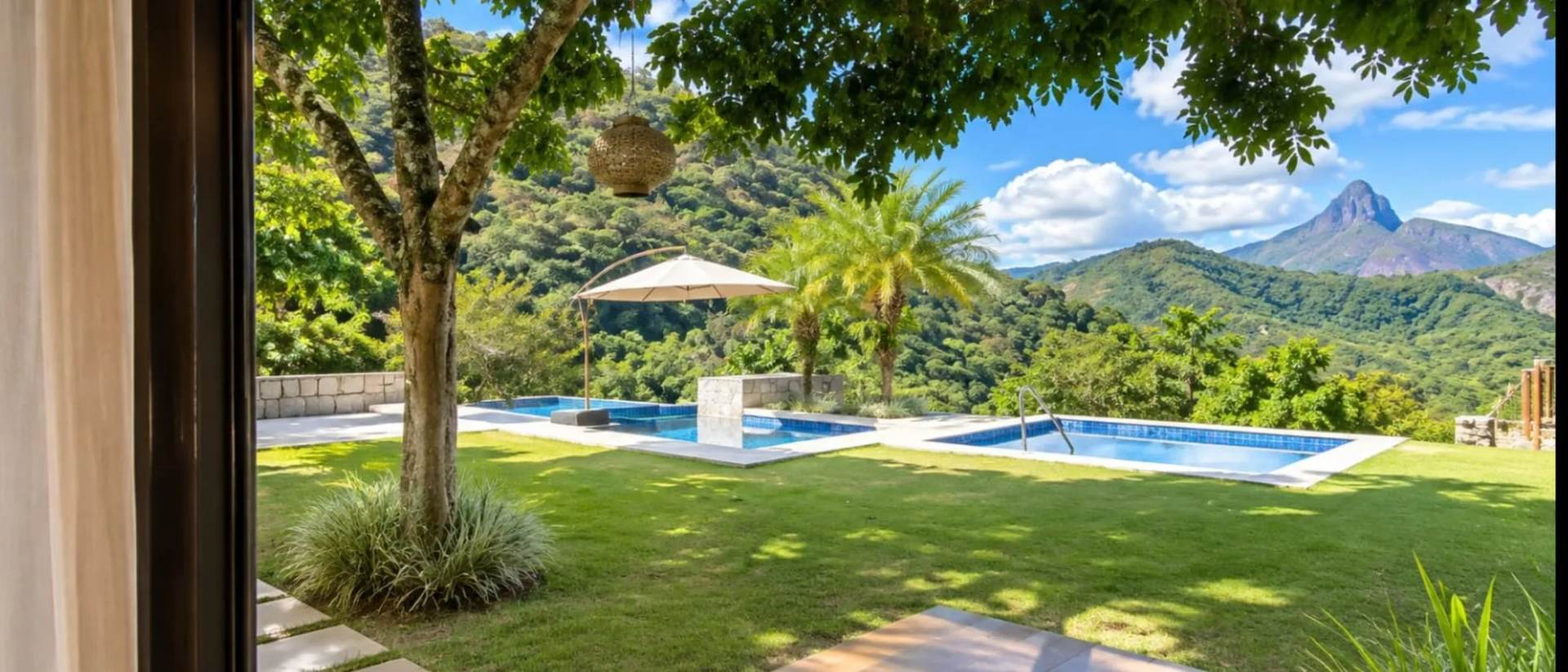

Against this backdrop, Petrópolis and its districts—especially Itaipava, Araras, Corrêas, Nogueira, Vale do Cuiabá, and Secretário—offer qualities that make the mountain region of Rio de Janeiro state particularly appealing to the luxury real estate market.
The combination of natural scenery, a mountain climate, gastronomy, architecture, and diverse lifestyles allows each area to offer a distinctive experience. Understanding these differences is essential for anyone looking to buy, sell, or invest wisely.
A home is no longer just an address.
For a long time, country homes were associated primarily with weekends, holidays, and periods of relaxation. Today, however, a home in the mountains can represent much more: a second home, a permanent lifestyle change, or even a primary residence for those seeking to balance work, comfort, and quality of life.
The ability to work remotely, enjoy more spacious surroundings, and connect more closely with nature has broadened the ways these properties can be used.
A home with mountain views, well-kept gardens, generous gathering spaces, and open-plan interiors can offer an experience that goes beyond architecture. It becomes part of daily life, family relationships, and the way its residents choose to spend their time.
This is where the concept of luxury takes on a new dimension: it’s not just about having more, but about living better.
Itaipava and the surrounding areas: different ways to experience mountain living
Although they are often treated as a single market, the neighborhoods and districts of Petrópolis have distinct characteristics that shape both the living experience and the choice of property.
Itaipava stands out for its blend of nature, dining, shopping, services, and access to a range of leisure options. It’s an appealing choice for those who want a mountain setting without giving up everyday conveniences.
Araras attracts those who value striking scenery, privacy, and a closer connection with nature. In some areas, properties with expansive lots and exceptional views offer a sense of retreat without necessarily sacrificing proximity to local services.
Corrêas offers a range of residential options, including luxury gated communities, homes that blend into the landscape, and properties that make it possible to take advantage of local infrastructure.
Nogueira offers options for those seeking tranquility and access to services, while in some areas, Vale do Cuiabá stands out for properties that emphasize privacy and a connection with nature. Secretário, meanwhile, has a more rural atmosphere that may appeal to those seeking an even closer connection with the landscape and the pace of country life.
These differences show why choosing a location should involve more than the prestige of an address. It should also reflect each buyer’s routine, priorities, and expectations.
What really defines a luxury property?
A luxury property is defined by more than its asking price or square footage. Its distinction lies in a combination of features that together deliver quality, functionality, comfort, and exclusivity.
Location remains a key factor, but it should be considered alongside construction quality, the layout of the rooms, natural light, ventilation, privacy, security, and the relationship between the home and the land.
In the mountain region, other factors take on special importance: sun exposure, topography, drainage, access conditions, preservation of vegetation, water availability, and maintenance of outdoor areas.
Features such as solar power, energy-efficient solutions, home automation, and integrated gathering spaces can add functionality and meet the expectations of buyers seeking a contemporary home.
Pools, outdoor entertaining areas, saunas, fireplaces, gardens, and mountain views can also enhance the experience a property offers. These features, however, need to fit the property as a whole and the lifestyle of the people who will live there.
The real distinction lies in the harmony between location, architecture, quality, functionality, and the experience of living in the home.
Buying a home in the mountains also calls for a financial assessment
A property’s appeal may spark a buying decision, but it shouldn’t be the only reason behind it.
For anyone considering a property as an investment, it’s important to assess its price against comparable properties, its condition, documentation, maintenance costs, homeowners’ association fees, and potential liquidity.
It’s also important to understand that the market doesn’t behave uniformly. Two properties with similar square footage can differ significantly in value because of location, design quality, site conditions, views, privacy, and available infrastructure.
Future appreciation isn’t guaranteed. A careful assessment should therefore take into account the property’s specific characteristics, market conditions, and the buyer’s goals, whether for a primary residence, a second home, or potential income generation.
The same principles apply to sellers. A well-supported valuation, a sound pricing strategy, and professional presentation help connect a property with buyers whose needs and preferences are a good fit.
The role of real estate curation in the luxury market
In a segment where every property has important distinguishing features, a real estate professional’s role goes far beyond showing homes and arranging tours.
It takes an understanding of the client’s profile, an ability to identify their priorities, and the skill to translate technical features into information that supports an informed decision.
A family looking for a full-time residence may prioritize convenience, infrastructure, and ease of getting around. Someone seeking a second home may place greater value on privacy, leisure spaces, and room to host friends and family. An investor, meanwhile, will need to consider other factors, such as costs, potential demand, liquidity, and long-term strategy.
Curation means thoughtfully connecting people with properties, considering both the home’s objective features and the expectations of its prospective buyer.
Knowing the region, its particular qualities, and the characteristics of each local market is an essential part of this process.
The future of luxury in the mountain region
Petrópolis and its surroundings offer the conditions for a diverse real estate market, where contemporary residences, historic properties, gated-community homes, exclusive lots, and nature-surrounded retreats all coexist.
As buyers increasingly view a property as a lifestyle choice, factors such as integration with the landscape, comfort, sustainability, privacy, and the quality of living spaces are becoming more important.
This shift expands the region’s possibilities, but it also calls for professionalism. A growing market doesn’t eliminate the need to assess every property individually, understand the terms of a sale, and respect the character of each area.
Rather than simply following trends, it’s important to recognize which features truly matter to each type of client and how those features relate to the property’s actual conditions.
The luxury of choosing how to live.
Perhaps the greatest luxury of mountain living is the opportunity to find a place that suits your own way of life.
For some, that means waking up to mountain views. For others, it means enjoying a garden, gathering the family around a table, working in a peaceful setting, or finding at the end of the day the quiet that urban life doesn’t always allow.
In the luxury real estate market, excellence means understanding that a property is more than a building: it’s an asset, an experience, and part of a story that begins with the choice of an address.
This perspective is what makes Petrópolis and Itaipava so special and underscores the value of working with a real estate advisor who can see in each property far more than its physical features.
Rosane Fiorese
Commercial Manager | Casa Ximenes Ateliê Imobiliário